

Pyometra is a serious infection of the uterus that can affect unspayed female dogs, usually developing within weeks after a heat cycle when shifting hormones create conditions that allow bacteria to thrive. While this sounds scary, understanding the warning signs and acting quickly can make all the difference in helping your furry family member get the treatment she needs to recover and live a long, happy life.
At Venetian Pet Hospital, we treat every patient like part of our own family. Our caring veterinary team is here to guide you through this challenging diagnosis with compassionate emergency care and clear answers to all your questions, so you can focus on getting your beloved dog back to her tail-wagging self.
Understanding Pyometra and How It Develops
Pyometra happens when bacteria enter the uterus during or shortly after a heat cycle, taking advantage of the naturally relaxed cervix and hormone changes that temporarily lower your dog’s defenses. According to the American College of Veterinary Surgeons, this condition typically shows up in middle-aged to older unspayed dogs, though younger pups can develop it too after their first heat cycle. As the infection progresses, the uterus fills with pus and swells, which can lead to serious complications without prompt veterinary attention.
Veterinarians recognize two forms of this condition. Open pyometra keeps the cervix open so infected material can drain, making it easier to spot the problem early. Closed pyometra is trickier because the cervix stays shut, trapping the infection inside where pressure builds, and toxins leak into your dog’s bloodstream.
Recognizing the Warning Signs of Pyometra
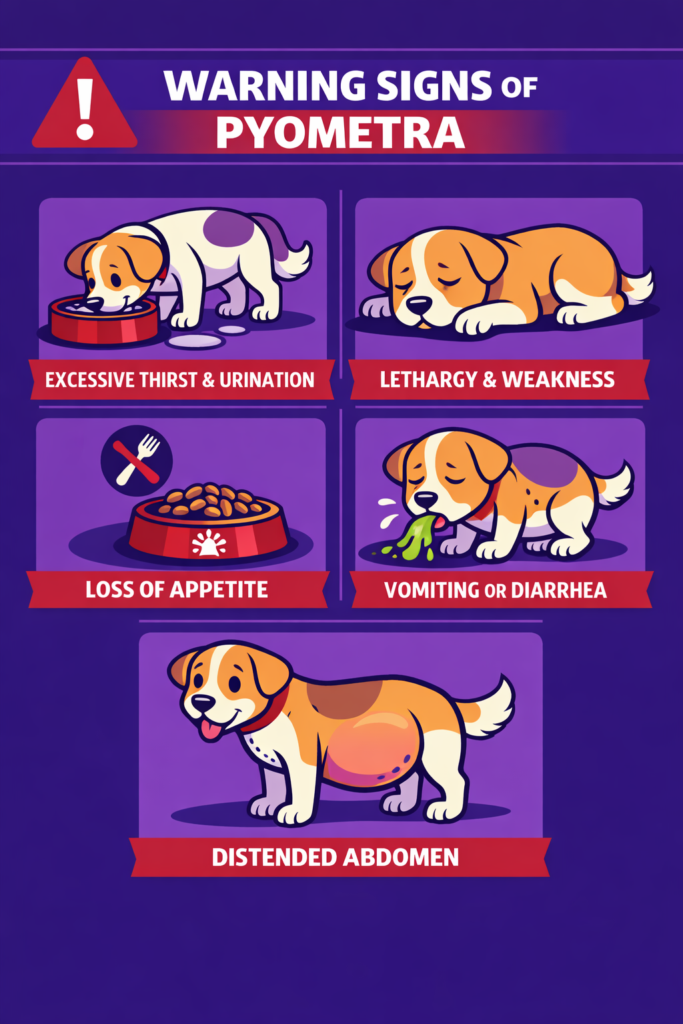
Your dog depends on you to notice when something’s not quite right, and pyometra can progress quickly once symptoms appear. Catching the following signs early and getting your pup to the vet right away gives her the best shot at a full recovery:
- Excessive drinking and urination: Your dog suddenly can’t seem to get enough water and needs frequent potty breaks as her body works hard to flush out toxins.
- Lethargy and weakness: She might lose interest in playtime, seem unusually tired, or have trouble getting up from her favorite napping spot.
- Loss of appetite: Even her most beloved treats don’t seem appealing anymore, and her food bowl stays full.
- Vomiting or diarrhea: Tummy troubles often accompany pyometra, as the infection affects her whole system.
- Distended abdomen: Her belly looks swollen or feels tight, especially when the infection is trapped inside
- Vaginal discharge: You might notice thick, smelly discharge that looks yellowish or brownish if she has the open form of pyometra.
If your unspayed dog shows any combination of these symptoms, especially after a recent heat cycle, don’t wait to see if things improve on their own. Give us a call right away so we can provide the urgent care she needs.
How Is Pyometra Treated?
Pyometra calls for immediate veterinary care and typically requires emergency spay surgery to remove the infected uterus and ovaries. Before surgery, we’ll stabilize your dog with IV fluids and antibiotics to address dehydration, correct any electrolyte imbalances, and begin treating the infection. We’ll also run blood tests and imaging to see how far the infection has spread and to check her other organs.
The surgical procedure resembles a standard spay but requires extra skill and care because the uterus is enlarged and fragile from infection. Our experienced surgeons work carefully to remove everything without any leaks that could spread infection throughout the abdomen. Most dogs bounce back beautifully after surgery when we catch the problem early, though she may need to stay with us for a few days while we monitor her recovery and keep her comfortable.
How to Prevent Pyometra in Your Pet
Pyometra is completely preventable by having your female dog spayed before her first heat cycle, which usually happens around six months of age. Spaying stops the hormonal roller coaster that sets the stage for uterine infections while also preventing surprise litters and reducing her risk of developing mammary tumors down the road. We know surgery can feel overwhelming, but a planned spay in a healthy young dog is much safer and easier than emergency surgery on a sick pup with pyometra.
Even if your dog has already been through one or more heat cycles, spaying still offers protection since the risk of pyometra climbs with age and repeated cycles. Our team is happy to talk through your dog’s reproductive health and wellness care options to find the right timing for this important preventive step.
Get Expert Emergency and Surgical Care at Venetian Pet Hospital
At Venetian Pet Hospital, we’ve helped countless dogs recover from pyometra over the years, and we know how scary this diagnosis can be for families who love their pets. Dr. Hanh Do, Dr. Sam Varon, Dr. Tracey Glieberman, and Dr. Pietro Catini bring both advanced surgical training and genuine warmth to every case, treating your dog with the same care and attention we’d give our own pets. Our hospital is equipped with modern diagnostic tools, a fully equipped surgical suite, and dedicated staff who’ll keep a close eye on your dog throughout her recovery.
Whether your unspayed dog is showing concerning symptoms or you’re ready to schedule a preventive spay, reach out to us today so we can help protect your four-legged family member from this dangerous condition.