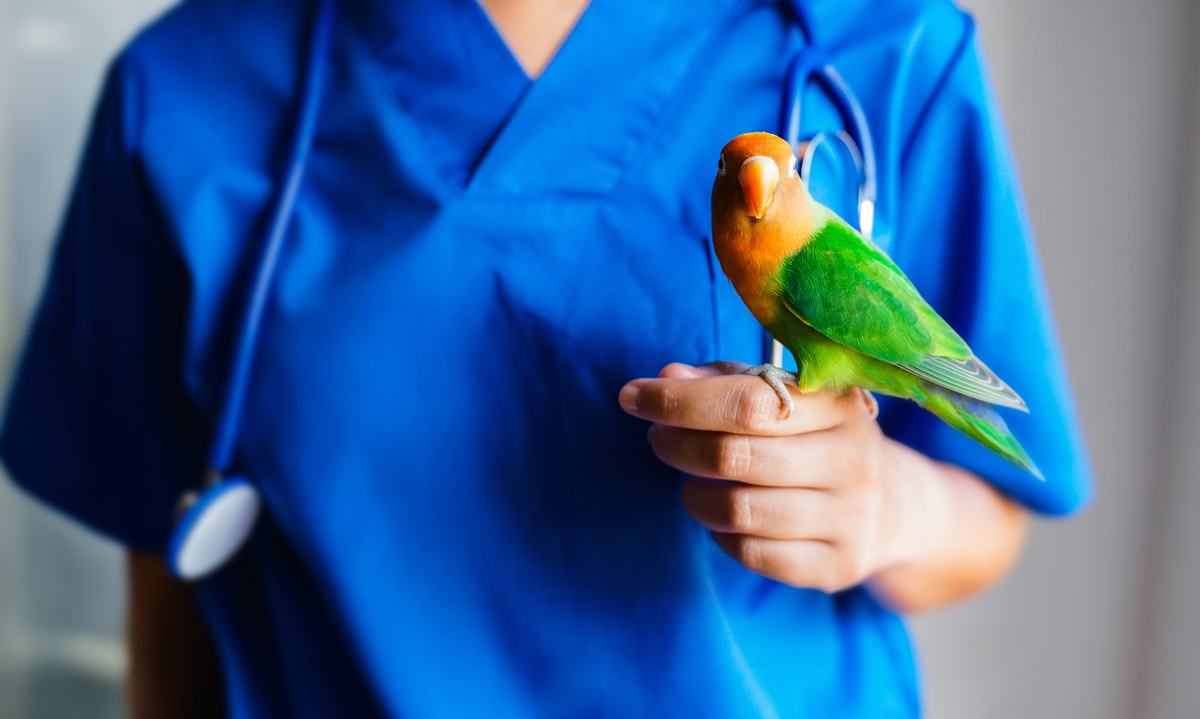
Birds may seem easygoing as pets, but the average home is full of hazards that most owners never see coming. From nonstick cookware fumes to open toilets, the everyday household presents a surprising number of dangers for avian companions, and knowing what to look for is the first step toward keeping them safe.
Creating a bird-safe home starts with working alongside a team that understands avian health. At Venetian Pet Hospital in Stockton, CA, we offer avian medicine services tailored to the unique needs of pet birds, whether that means a routine wellness exam or guidance on how to reduce hazards in your living space. We are here to help you give your bird the safest, healthiest home possible.
Why Birds Are More Vulnerable Than You Might Think
Birds have incredibly sensitive respiratory systems, which makes them far more susceptible to airborne toxins than most other household pets. A fume that barely registers for a dog can be fatal to a parrot. That sensitivity extends beyond the air they breathe to the surfaces they land on, the foods they eat, and the objects they chew.
According to the Centers for Disease Control and Prevention, over 5 million households in the United States have pet birds. That is a significant number of animals living in homes that may not be fully equipped to protect them. Understanding the risks specific to birds is essential for any responsible owner.
Airborne and Kitchen Hazards
One of the most well-documented dangers to birds is polytetrafluoroethylene, the coating found in many nonstick pans. When these pans are overheated, the gases released can cause rapid respiratory failure in birds, and in many cases, the only sign is sudden death. Self-cleaning ovens, certain irons, and ironing board covers can pose the same risk.
Tobacco smoke is another serious concern. Passive inhalation of secondhand smoke can cause chronic respiratory disease in birds over time, along with skin and feather problems. Even residue left on hands or clothing from a recent smoke can cause harm with prolonged exposure.
Common Home Hazards to Address
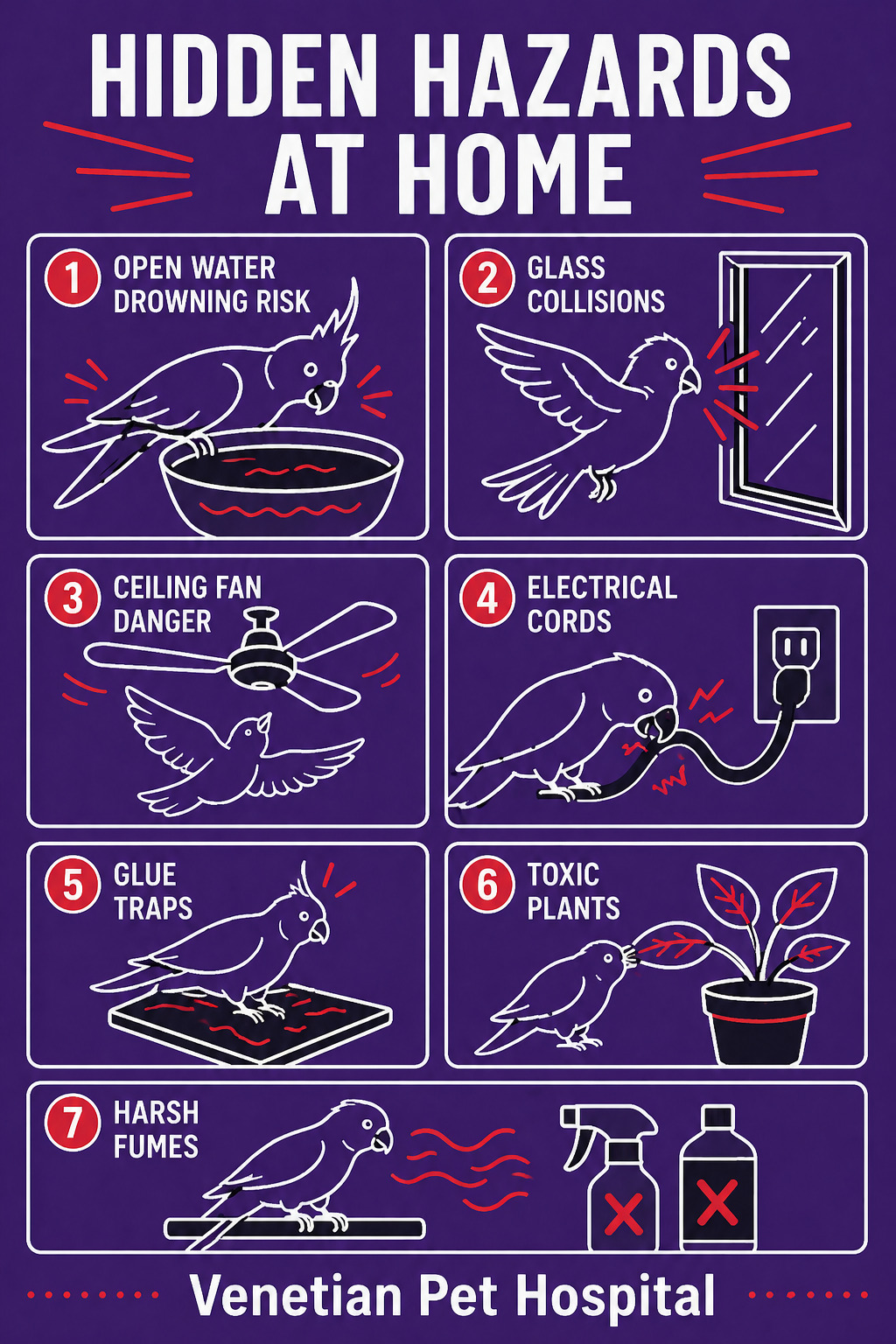
Getting your home bird-ready does not have to feel overwhelming. A simple room-by-room walkthrough with your bird’s habits in mind goes a long way. Here are some of the most important hazards to address:
- Open water: Toilets, sinks, filled bathtubs, and open pans on the stove all pose drowning risks
- Windows and mirrors: Birds can fly directly into glass, causing serious injury
- Ceiling fans: A bird loose in a room with a running ceiling fan is at major risk of collision
- Electrical cords: Birds chew on cords and can be electrocuted
- Glue traps: Insect and rodent traps are a hazard, as birds can fly directly into them
- Household plants: Calla lilies, poinsettia, and mistletoe are among the toxic varieties
- Cleaners and sprays: Bleach, ammonia, perfumes, and air fresheners should be used away from birds
Addressing these hazards is straightforward, and the payoff is a much safer environment for your bird whenever they are out of their cage.
Safe Cage Placement and Materials
Where a bird’s cage sits in the home matters more than most owners realize. Cages placed in or near kitchens expose birds to cooking fumes daily, well before the situation becomes an emergency. High-traffic areas near exterior doors and windows increase the chance of escape or injury.
Cage materials are equally important. Hardware cloth, older bird toys, and galvanized metal accessories can contain lead or zinc, both of which are toxic if ingested. Regularly inspecting and replacing worn or questionable accessories is a simple habit that protects birds over the long term. For birds that may have already ingested something harmful, our urgent care services are available to help when time is of the essence.
Venetian Pet Hospital Is Here for Your Bird
Even with every precaution in place, birds benefit from regular veterinary care from someone familiar with avian health. Birds are prey animals by instinct, meaning they tend to mask signs of illness until they are quite sick. Because of this, our team takes patient monitoring seriously at every stage of care, ensuring that even subtle changes in condition are caught and addressed. Routine wellness exams through our exotic pet care program help catch problems early, before they become emergencies.
Our team at Venetian Pet Hospital includes Dr. Hanh Do, Dr. Sam Varon, Dr. Tracey Glieberman, and Dr. Pietro Catini, all of whom care deeply about every patient that walks, hops, or flies through our doors. Whether your bird needs a wellness visit or you have questions about making your home safer, we are happy to help. Reach out through our contact form to schedule an appointment today.