
If you share your home with a feathered companion, the thought of them contracting a serious illness like avian influenza can be deeply concerning. Bird flu isn’t just a threat to wild waterfowl or commercial poultry farms; pet birds can also be vulnerable to this potentially devastating disease.
At Venetian Pet Hospital, our team understands the unique health needs of avian companions, from parrots and cockatiels to parakeets and finches. With specialized avian medicine services, we help bird owners in Stockton recognize warning signs, protect their pets, and provide compassionate care when illness strikes.
What Is Avian Influenza?
Avian influenza, commonly called bird flu, is a viral infection that primarily affects birds. Several strains of the virus exist, ranging from mild to highly pathogenic. According to the Centers for Disease Control and Prevention, highly pathogenic avian influenza can cause severe disease and high mortality rates in domestic poultry and some wild bird populations.
While wild birds often serve as natural reservoirs for the virus, pet birds kept indoors face a lower risk compared to outdoor or farm birds. However, transmission can still occur through contact with infected birds, contaminated surfaces, or even through wild birds that approach outdoor aviaries.
Recognizing Symptoms of Avian Influenza in Pet Birds
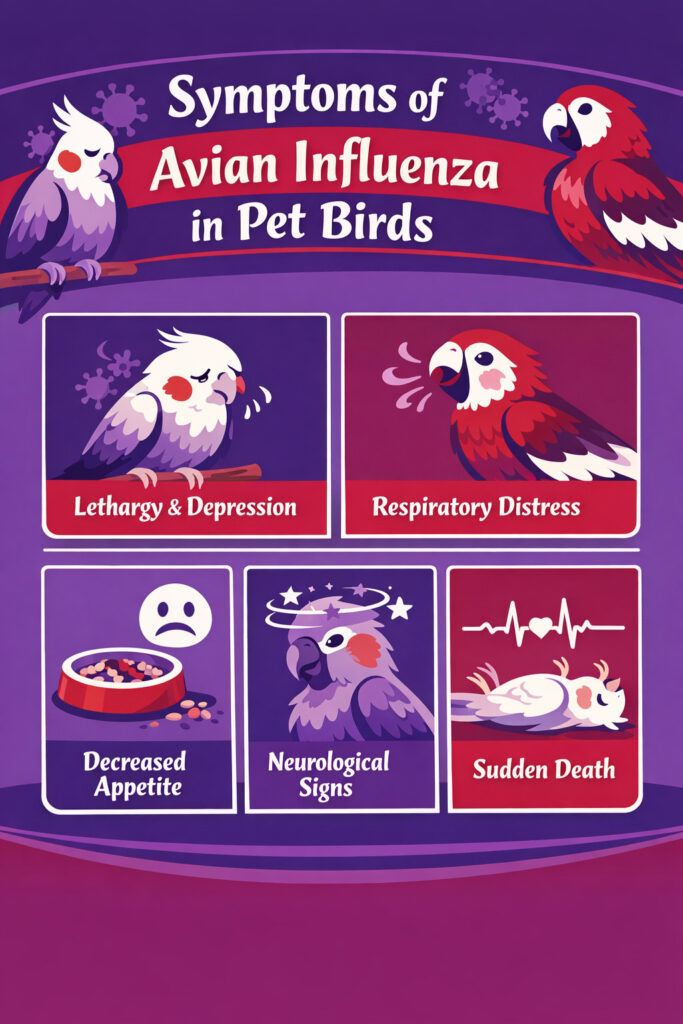
Bird flu symptoms in pet birds can vary depending on the strain and the individual bird’s health. Early detection is critical for any chance of successful treatment and preventing spread to other birds in your home.
Common warning signs include the following:
- Lethargy and depression: Your bird may appear unusually quiet, reluctant to perch, or less interested in normal activities.
- Respiratory distress: Watch for labored breathing, nasal discharge, sneezing, or coughing sounds.
- Decreased appetite: Refusal to eat or drink is often one of the first noticeable changes.
- Neurological signs: Head tilting, loss of coordination, tremors, or seizures may indicate severe infection.
- Sudden death: In highly pathogenic strains, birds may die quickly with few or no prior symptoms.
If you notice any of these symptoms, contact our hospital immediately. Time is essential when dealing with potentially serious avian illnesses.
How Pet Birds Contract Avian Influenza
Understanding transmission routes helps you minimize your bird’s exposure risk. Pet birds typically contract avian influenza through direct or indirect contact with infected birds or contaminated environments.
Direct contact occurs when your pet bird interacts with an infected bird, whether wild or domestic. Indirect transmission happens through contaminated food, water, surfaces, or even your clothing and shoes if you’ve been near infected birds or their droppings. Wild waterfowl and shorebirds are natural carriers of avian influenza viruses and may show no symptoms while spreading the disease.
Bird Flu Prevention Strategies for Bird Owners
Protecting your avian companion from bird flu requires vigilant biosecurity practices. Keep your pet birds indoors and away from windows or doors where wild birds congregate. If you maintain outdoor aviaries, use proper screening to prevent contact with wild birds and regularly disinfect all surfaces.
Practice good hygiene by washing your hands thoroughly before and after handling your birds, their food, or their cages. If you visit locations with other birds, change your clothes and shoes before interacting with your own pets. Never share equipment, toys, or dishes between your birds and others without proper disinfection.
Regular wellness examinations help us catch potential health issues early. Our veterinarians can assess your bird’s overall health and discuss prevention strategies based on your individual situation and local disease risks.
What to Do If You Suspect Bird Flu
If you suspect your bird may have been exposed to avian influenza or is showing concerning symptoms, isolate the bird immediately from any other birds in your household. Contact our hospital right away for guidance rather than attempting home treatment. Avian influenza requires professional veterinary assessment and, in confirmed cases, may need to be reported to state animal health officials.
Keep in mind that while transmission from birds to humans is rare, it can occur with highly pathogenic strains. Following proper biosecurity and hygiene practices protects both your pet and your household.
Get Trusted Avian Care at Venetian Pet Hospital
When your feathered companion needs attention, Venetian Pet Hospital provides comprehensive avian medicine services in a caring, family-owned environment. Our veterinarians have experience with birds ranging from common parakeets to exotic species, and we understand the unique challenges of avian health care. From routine beak trims to urgent medical concerns, our team approaches every bird with the gentle care they deserve.
Whether you have questions about protecting your bird from avian influenza or need to schedule a wellness examination, our team at Venetian Pet Hospital is here to help. Contact us today to discuss your bird’s health needs or to schedule an appointment with one of our avian-experienced veterinarians.