Anesthesia is one of the most common concerns pet owners face when their dog needs a procedure, and it is a completely understandable one. The good news is that modern veterinary anesthesia is safer than ever, and with proper preparation and monitoring, the vast majority of healthy dogs come through anesthetic procedures without complications.
At Venetian Pet Hospital, we take anesthesia seriously at every step of the process. Our anesthesia services are built around careful patient evaluation, individualized drug protocols, and hands-on monitoring throughout your dog’s procedure. Whether your pet needs a routine dental cleaning or a more involved surgery, our team works to make the experience as safe as possible.
How Veterinary Anesthesia Actually Works
Modern anesthesia is about a lot more than just putting a dog to sleep. It’s a carefully planned process that starts well before your pet ever enters the treatment room.
Pre-Anesthetic Evaluation
Before administering any anesthesia, our team takes the time to carefully assess your dog’s overall health. That usually includes a physical exam and, in most cases, pre-anesthetic bloodwork to make sure everything looks good internally. We review factors such as kidney and liver function, red and white blood cell counts, and other markers to help us understand how your dog is likely to respond to anesthesia.
If your dog is older or has existing health concerns, we may recommend a few extra steps, such as chest X-rays or an electrocardiogram, just to make sure it’s safe to move forward. The goal is always to plan and keep your dog as comfortable and safe as possible throughout the process.
Pre-anesthetic evaluation also helps us select the right drug combination for your individual dog. A healthy two-year-old Lab and a senior dog with heart disease need very different approaches. According to a peer-reviewed study published in Veterinary Evidence, careful selection of premedication agents plays a meaningful role in reducing perioperative stress and the risk of complications in dogs undergoing elective procedures. Tailoring the protocol to each patient is a core part of our approach to anesthesia care.
What Happens During the Procedure
Once your dog is under anesthesia, continuous monitoring is the most important safety measure we have. Our team tracks heart rate, respiratory rate, blood pressure, oxygen levels, and body temperature throughout the entire procedure. These readings allow us to catch and respond to any changes in real time. Our anesthesia patient monitoring protocols are designed to keep your pet stable from induction through recovery.
Pain management is also integrated into our anesthetic plans. By using multimodal analgesia, we reduce the amount of anesthetic needed overall, which lowers the risk of complications and helps your dog wake up more comfortably.
What Affects Anesthesia Risk in Dogs
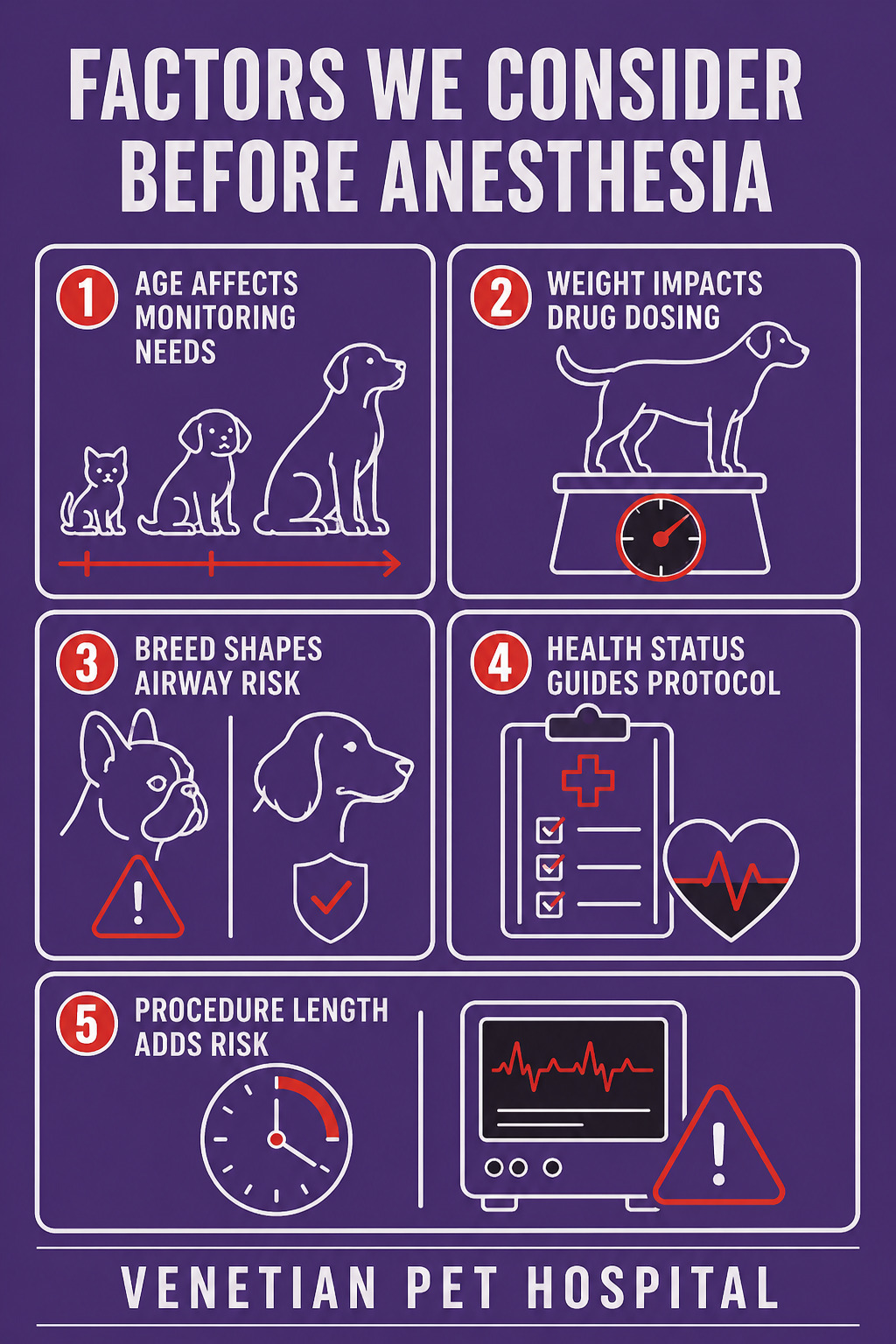
All anesthesia carries some degree of risk, and being honest about that matters. Risk level varies depending on several factors, and understanding them helps you make informed decisions for your pet.
Here are the factors that most commonly influence anesthetic risk:
- Age: Puppies and senior dogs require closer monitoring due to immature or aging organ function
- Weight: Both underweight and overweight dogs can present challenges with drug dosing and airway management
- Breed: Brachycephalic breeds like Bulldogs and Pugs face higher respiratory risks under anesthesia
- Health status: Dogs with heart, kidney, or liver disease require extra precautions and adjusted protocols
- Procedure type: Longer or more invasive procedures generally carry a greater cumulative risk
Knowing your dog’s individual risk profile allows us to plan accordingly, and our pre-anesthetic evaluation is specifically designed to surface any concerns before they become problems.
Keeping Your Dog Safe Before and After Anesthesia
Your involvement matters before the procedure as well. We ask that dogs be fasted before anesthesia, typically for eight to twelve hours, depending on age and health status. Fasting reduces the risk of aspiration, which occurs when stomach contents enter the airway during anesthesia and can cause serious complications. We will give you specific fasting instructions tailored to your dog at the time of scheduling.
After the procedure, recovery monitoring continues in our facility until your dog is stable and alert enough to go home safely. Most dogs bounce back quickly, though some may be groggy for several hours. Our team will review post-operative care instructions with you before discharge, including any signs to watch for that would warrant a follow-up call.
We also offer comprehensive surgical services for dogs requiring procedures beyond routine care. For patients whose anesthesia is tied to a surgical concern, we treat it as a connected process from pre-op through recovery. Keeping your dog up to date on wellness exams and vaccinations also helps us maintain a complete health picture that informs our approach to anesthesia when needed.
Venetian Pet Hospital Is Here for You and Your Dog
At Venetian Pet Hospital, anesthesia safety is never an afterthought. Our veterinary team, including Dr. Hanh Do, Dr. Sam Varon, Dr. Tracey Glieberman, and Dr. Pietro Catini, brings genuine skill and attentiveness to every anesthetic case. We are a family-owned practice in Stockton that believes your dog deserves the same thoughtful care we would want for our own pets. That commitment shows in how we prepare, monitor, and follow up with every anesthetic patient.
If your dog has an upcoming procedure or you have questions about what to expect, we are glad to walk you through the process. Contact us today to schedule an appointment or speak with our team about your dog’s specific needs.